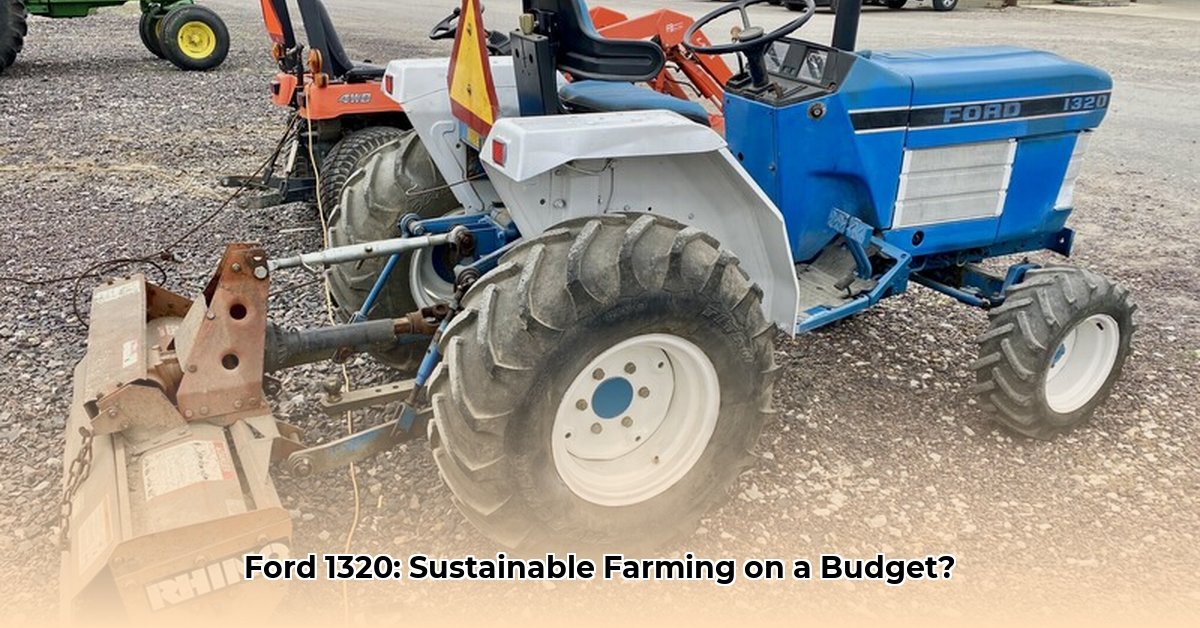
The Ford 1320: A Sustainable Farming Workhorse?
The Ford 1320 tractor, manufactured between 1987 and 1998, presents a compelling proposition for environmentally conscious farmers: affordability and fuel efficiency. But is this vintage machine truly a sustainable solution for modern agriculture? Let's delve into the advantages and disadvantages of owning a used Ford 1320. For financing options, check out these tractor loan rates.
Affordability and Fuel Efficiency: A Strong Starting Point
One of the most significant draws of a used Ford 1320 is its price. Compared to newer tractors, the initial investment is substantially lower, making it an accessible option for small-scale farmers or those starting out. Furthermore, its smaller engine size translates to better fuel economy than larger models. This translates directly into lower operational costs and a reduced carbon footprint – a crucial consideration for sustainable farming. But will these savings offset the challenges of maintenance and repairs?
Maintenance and Parts: The Challenges of Vintage Machinery
The age of the Ford 1320 brings with it the inevitable challenges of sourcing parts and performing repairs. Finding replacement components might require more effort, potentially involving online searches, specialized suppliers, or even utilizing a network of fellow farmers to locate the necessary parts. This can lead to increased repair costs and downtime. However, the relative simplicity of the 1320's mechanics also means some repairs are achievable with DIY skills and readily available tools. This can reduce the reliance on specialized mechanics, decreasing the financial burden.
Sustainable Farming Practices and the Ford 1320: A Balanced Perspective
The Ford 1320's smaller size and lower fuel consumption contribute to a smaller environmental footprint compared to larger, modern tractors. However, its limitations in power output might necessitate adjustments in farming techniques. You may need to adopt more labor-intensive practices or use smaller implements. This shift requires a thoughtful assessment of your farming needs and a willingness to balance lower fuel costs with the potential increase in labor. This might be seen as an investment in both your farm and a healthier planet.
"The Ford 1320's fuel efficiency can be a significant advantage for sustainable farming, but only if you're realistic about its capabilities. Don't expect it to magically solve all your problems," notes Dr. Emily Carter, Agricultural Engineer at the University of California, Davis.
Before You Buy: Essential Pre-Purchase Steps
Before making a purchase, several key steps can prevent potential problems and ensure a sound investment:
Thorough Inspection: A pre-purchase inspection by a qualified mechanic is highly recommended, uncovering potential issues and saving you from costly repairs later.
Parts Availability Research: Proactively investigate the availability of parts. Contact local mechanics and suppliers, and search online resources. Your network of fellow farmers will be an invaluable asset here.
Workload Assessment: Honestly evaluate your farm's needs. Will the 1320 handle your typical workload efficiently? Understanding limitations prevents disappointment and frustration.
Realistic Maintenance Budget: Create a budget that includes potential repairs and parts replacements throughout the tractor’s life, helping you plan financially.
Community Engagement: Join local farming communities to tap into their collective knowledge, share experiences, and access additional resources.
How to Maintain Your Ford 1320 for Sustainable Farming
Maintaining your Ford 1320 efficiently is crucial for long-term sustainability. A proactive maintenance plan minimizes downtime, extends the tractor's lifespan, and reduces the need for frequent part replacements.
Daily and Regular Maintenance: A Proactive Approach
Regular inspections are fundamental. A quick daily check should include:
- Fluid Levels: Check engine oil, coolant, transmission fluid, and hydraulic fluid. Low levels should be topped off immediately.
- Leaks: Inspect for any leaks, however small. Early detection prevents larger, more costly problems.
- Tire Pressure: Proper inflation ensures fuel efficiency and traction.
- Belts and Hoses: Visually inspect belts and hoses for wear and tear. Replace damaged components promptly.
Scheduled maintenance is equally essential:
- Engine Oil and Filter Change: Every 100 hours or more frequently if operating in dusty conditions, using the recommended oil type (typically SAE 15W-40).
- Fuel Filter Replacement: At least annually, or more often if fuel-related problems arise.
- Air Filter Replacement: At least twice a year, or more often under dusty conditions.
- Hydraulic Fluid and Filter Change: Every 250 hours or annually, using the recommended hydraulic fluid type (often 134D).
- Coolant Flush and Replacement: Every 2 years to prevent overheating and potential engine damage.
Weighing the Pros and Cons: Making an Informed Decision
Here's a summary to help you decide if a Ford 1320 is the right tractor for your operation:
| Pros | Cons |
|---|---|
| Lower purchase price | Higher potential maintenance costs |
| Better fuel economy than larger tractors | Limited power output; may not suit all tasks |
| Lower manufacturing environmental impact | Parts can be difficult to source; longer repair times |
| Simpler mechanics; easier DIY repairs | Lack of modern technology (GPS, automatic steering) |
The Bottom Line: Is the Ford 1320 Right for You?
A used Ford 1320 tractor can be a financially sound and environmentally responsible choice for sustainable farming, particularly for small-scale operations focused on minimizing their environmental impact. However, thorough planning, including assessing the potential challenges of maintenance and parts sourcing, is crucial for success. If you’re prepared to be proactive with maintenance and are willing to adapt your farming practices, the Ford 1320 might be the perfect budget-friendly workhorse for your sustainable farm.